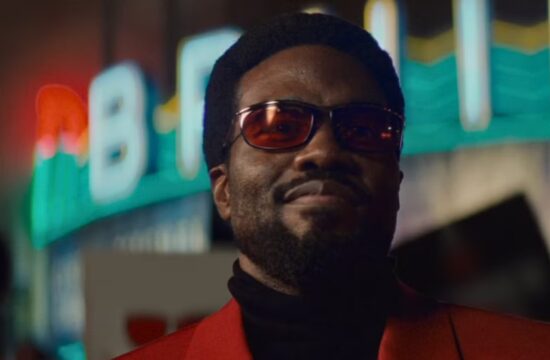
Promotional material for "The Odyssey"
by Austin Lowery
Homer’s “The Odyssey” is one of the oldest and most influential stories ever put to paper, helping to set the foundation for modern storytelling and the hero’s journey. With a story that has been retold and referenced many times over, I was shocked in 2024 to see that Christopher Nolan announced that he would be adapting the story for modern audiences. Despite sticking to the main story beats of Odysseus’ journey back home, Nolan was able to capture a new angle that many versions of the story had never explored before.
One of the strong points of Nolan’s version of the Odyssey is its heavy focus on Odysseus and how he may not want to return home to Ithaca after the war due to the destruction and pain that he inflicted onto the citizens of Troy and the village that him and his men stopped at on the way back home. It also showcases Odysseus’ inability to let go of control and his constant trying to fight back against nature and the gods to get his way.
One of the things that was constantly shown in bits and pieces of the movie was how the Trojan War and the plan to break the walls had happened. Nolan kept showcasing it through Odysseus slowly having to remember his past due to Calypso feeding him lotus flowers. As the movie went on, we slowly learned that Odysseus and his men had completely destroyed and pillaged Troy, harming even women and children while using underhanded tactics like the Trojan Horse to get into the walls. All of these went completely against the beliefs of Odysseus, someone who believed in giving his enemies a chance to run by plucking his bow like a harp as a warning. This leads to the story of the sea people, a group raiding islands and cities, breaking the laws of the land and eventually causing the rest of Greece to turn their backs on their own traditions.
The large focus on Odysseus in the last third of the movie, after his return home setting up the plan to kill the suitors and to go into exile, was a great showcasing of his character development. Due to the events of the war and the journey home, he decides to return in disguise, both for his protection but also to the feeling of shame from his mistakes, believing he hasn’t earned his right to return home until he gets rid of the suitors and help return his kingdom to normal. He disguises himself as a beggar and uses the test set up by Penelope to prove his identity with his bow, which only he knows how to string. Once he has the bow he plucks it to prove its him and to give his enemies a warning before he starts to kill them, showcasing his return to his own moral beliefs.
While the movie was great at showcasing and building up the characters, it left the actual odyssey rather lacking. While I loved the depiction of the Cyclops, the fact that they left out the part of Homer’s story where Odysseus says his name is Nobody takes away from one of Odysseus key character traits, the fact that he is clever and has to use his brain more than other Greek heroes.
Beyond that, many parts of the journey home felt lacking such as the island of giant cannibals and the monsters Scylla and Charybdis. Both of these scenes came off as unnecessary in the story the Nolan was telling, and that he just felt obligated to go off of the checklist of stops that were made in the original story. Circe’s section was amazing, though, as it helped to showcase Odysseus’s wit in knowing not to trust Circe due to his men disappearing after being at her house, as well as guessing that her bird was special to her. I also loved how Circe’s section helped characterize Odysseus’ crew, a group of men who distrust their leader and act on more animalistic behaviors, with Circe calling their human forms their “disguises” and that their true forms are them as pigs.
Another complaint is the fact that the movie was made for 70mm Imax film. As someone who watched The Odyssey in both a regular theatre and a 70mm film, it is very obvious how much of a difference the 70mm makes, with better color grading, audio, and framing of shots. While I do understand the artistic choice to use 70mm as it does help to enhance the film, it does lead to make the true form of the movie more inaccessible to people and makes it so that there is a lesser way of viewing the movie, which is the version shown at regular movie theatres.
Despite these few complaints, the movie as a whole is an amazing showcase of war and how it can cause people to throw away their beliefs and lose their way. Its use of practical effects made the world feel more real and its focus on the character of Odysseus rather than the journey itself was a refreshing take on the classic story. If you have time, I would highly recommend that you watch the movie as it is one of the best of the year.